


The U.S. EIA increased its forecast for 2026 renewable diesel production in its latest Short-Term Energy Outlook, released Aug. 12. The 2026 forecast for SAF production was lowered, but the outlook for biodiesel production was maintained.

Gevo Inc. on Aug. 11 released second quarter results, reporting positive net income and positive adjusted EBTIDA for the period. The company also confirmed it is prioritizing development of a 30 MMgy ethanol-to-jet project in North Dakota.

Aemetis Inc. released Q2 results, reporting increase revenue when compared to Q1. During an earnings call, company officials detailed progress with the company’s RNG, ethanol, biodiesel, SAF and carbon CCS projects.

Conestoga Energy on Aug. 14 announced the acquisition of SAFFiRE Renewables LLC, a process technology company that enables production of ultra-low carbon intensity ethanol and intermediates, from Southwest Airlines Renewable Ventures LLC.

DHL Express and the Cathay Group have entered into a new SAF partnership. Under the agreement, Cathay will supply DHL Express with 2,400 metric tons of SAF for international flights departing from three airports in Asia.
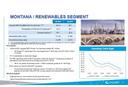
Calumet Inc. on Aug. 8 confirmed its Montana Renewables biorefinery is currently running at full capacity. An initial phase of the company’s MaxSAF initiative remains on track to boost SAF capacity to up to 150 MMgy by mid-2026.

The U.S. EPA on Aug. 13 announced the relaunch of EPA’s Guidance Portal, a streamlined website for accessing important guidance documents related to air quality, water protection, hazardous waste management, and more.

The USDA maintained its outlook for 2025-’26 soybean oil use in biofuel production in its latest World Agricultural Supply and Demand Estimates report, released Aug. 12. The forecast for soybean oil prices was also unchanged.

U.S. soybean production for 2025 is forecast at 4.29 billion bushels, down 2% when compared to last year, according to the USDA National Agricultural Statistics Service’s latest monthly Crop Production report, released Aug. 12.

As of July 2025, California’s SCFS requires renewable fuel producers using specified source feedstocks to secure attestation letters reaching back to the point of origin. This marks a significant shift in compliance expectations.
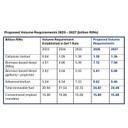
The public comment period on the U.S. EPA’s proposed rule to set 2026 and 2027 RFS RVOs and revise RFS regulations closed Aug. 8. Biofuel groups have largely expressed support for the proposal but also outlined several ways to improve the rulemaking.

The U.S. renewable fuels industry on Aug. 8 celebrated the 20th anniversary of the Renewable Fuel Standard. Federal lawmakers also marked the occasion with resolutions introduced in the House and Senate earlier this month.

In celebration of World Biodiesel Day, MOL Group on Aug. 8 announced SAF was successfully produced for the first time at INA’s Rijeka Refinery during a pilot project to process biocomponent. Renewable diesel was also produced.

At the University of Missouri, plant biochemist Jay Thelen is using arabidopsis as a powerful model to explore ways to boost oil production — an important step toward creating more sustainable, plant-based energy sources.

Provectus Biofuels Inc. on July 30 announced the company has signed a letter of intent with the Town of Vegreville in Alberta to develop a biofuel facility that will convert wheat straw into renewable jet fuel (RJF).

Iowa farmers have a new market opportunity for their 2025 soybean crop. Landus is expanding its Clean Fuel Regulation initiative, made possible by recent policy changes expected to increase Canada's demand for liquid biofuel.
The Renewable Transport Fuels Association on Aug. 4 issued a statement calling for the U.K.’s SAF mandate to be amended to make British bioethanol eligible. It should fall within the HEFA cap, according to the RTFA.

Sens. Amy Klobuchar, D-Minn., and Jerry Moran, R-Kan., on July 31 announced the introduction of the Ag BIO Act. The legislation aims to update the USDA’s loan guarantee program to better support biorefining projects.

XCF Global Inc. on Aug. 5announced it leverages Alfa Laval Inc. pretreatment technology at its New Rise Reno biorefinery, a sustainable aviation fuel (SAF) plant located in Nevada. The pretreatment technology enhances feedstock flexibility at the plant.

U.S. Secretary of Agriculture Brooke L. Rollins on Aug. 1 announced the opening of a 30-day public comment period for stakeholders to provide feedback on the department’s reorganization plan, as outlined in the memorandum released July 24.

Sen. Chuck Grassley, R-Iowa, on July 31 pressed Derek Theurer, President Donald Trump’s nominee to serve as under secretary of the U.S. Department of Treasury, on the expected timeline for the release of 45Z guidance.

LG Chem and Enilive have taken a major step toward biofuels growth by breaking ground on Korea’s first hydrotreated vegetable oil (HVO) and sustainable aviation fuel (SAF) production plant in LG Chem’s Daesan Chemical Complex.

Avfuel Corp., the leading independent supplier of aviation fuel and services, is expanding its sustainable aviation fuel (SAF) footprint with the addition of a new, strategic supply point in Denver, Colorado—the first of its kind in the region.

Rayonier Advanced Materials Inc. on July 31 announced the signing of a MOU with GranBio LLC to jointly explore the development of a small-scale commercial cellulosic sustainable aviation fuel (SAF) facility co-located at RYAM’s Jesup, Georgia site.

CVR Energy Inc. on July 30 reported its renewables segment achieved increased throughput during Q2 despite unplanned downtime but reported a net loss of $11 million. The company expects to retroactively claim the 45Z credit for volumes produced.
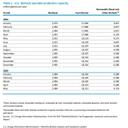
Total U.S. operable biofuels production capacity expanded in May, with gains for renewable diesel and a small decrease for ethanol, according to data released by the U.S. Energy Information Administration. Feedstock consumption was up.
SAF-producer XCF Global Inc. on July 28 announced it has signed an exclusive, non-binding indication of intent (IOI) with a renewable fuels infrastructure and feedstock solutions company based in the western U.S.
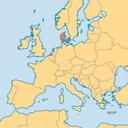
The European Commission on July 28 approved a €36 million ($41.07 million) Danish state aid scheme designed to encourage airlines operating in Denmark to use sustainable aviation fuel (SAF) on domestic routes.

Domestic production of SAF to meet 30% of New Zealand's jet fuel needs by 2050 could generate NZD 1.3 billion in GVA and create 5,700 jobs, while also strengthening fuel security, according to a Cyan Ventures study supported by Boeing.

The Civil Aviation Decarbonization Organization, and 4AIR announced a strategic collaboration between their respective SAF registries. The collaboration's key focus is on interoperability to enhance data integrity and mitigate double issuance risks.
Advertisement

@ Copyright 2026 - BBI International - All rights reserved.