


The USDA on Oct. 19 announced plans to launch a new Harvest Fuel Relief program to provide $8 billion to U.S. farmers to help offset high fuel costs. The one-time payments will be funded through the USDA’s CCC and administered by the FSA.

The USDA maintained its forecast for soybean oil use in biofuel production in its latest World Agricultural Supply and Demand Estimates report, released Oct. 9. The outlook for soybean oil prices was also unchanged.

The USDA on Oct. 9 released its latest Crop Production report, predicting soybean production for beans will reach a record high 4.56 billion bushels in 2026, up 1% when compared to the September forecast and up 7% when compared to 2025.

The USDA on Oct. 6 announced a $180 million investment to launch the USDA’s Seed Sovereignty Initiative, a major effort to both strengthen U.S. agricultural security by protecting the plant genetic resources and enabling ag innovation.

According to the USDA, President Trump’s executive order that lifts taxes on dyed-diesel is expected to represent approximately $640 million in combined federal and state savings across about 224.6 million harvested acres.

U.S. biofuel producers consumed 31.275 billion pounds of feedstock in July, up nearly 3% when compared to June and up nearly 7% when compared to July 2025, according to data released by the U.S. Energy Information Administration on June 30.
Old crop soybean stocks in all positions as of Sept. 1 were at 315 million bushels, down 3% when compared to the same period of 2025, according to the USDA’s latest quarterly Grain Stocks report, released Sept. 30.

The USDA on Sept. 29 announced increased financial assistance for the Regenerative Pilot Program from $700 million to $1 billion in fiscal year 2027, providing more producers with the opportunity to adopt conservation systems.

A new report co-authored by the National Corn Growers Association and American Soybean Association documents ongoing economic pressures across farm country, despite recent price improvements in both commodity markets.

The USDA’s National Agricultural Statistics Service (NASS) today launched AgInsights, a new data dissemination tool that will serve as a key component of NASS’s ongoing modernization strategy.

CHS on Sept. 14 announced plans to construct a soybean processing facility near Evansville, Wisconsin, representing an investment of approximately $700 million. The facility will have the capacity to process 80 million bushels annually
The USDA maintained its forecast for 2026-’27 soybean oil use in biofuel production in its latest World Agricultural Supply and Demand Estimates report, released Sept. 11. The estimate for 2025-’26 soybean use in biofuel production was revised up.
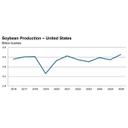
The USDA released its latest monthly Crop Production report on Sept. 11, predicting soybean production for beans will reach 4.53 billion bushels in 2026, up slightly from the previous forecast and up 6% from 2025.
The U.S. biofuel industry consumed 30.46 billion pounds of feedstock in June, up 4% when compared to May and up 6% when compared to June 2025, according to data released by the U.S. Energy Information Administration on Aug. 31.
Bayer and Neste close commercial agreement to jointly scale newgold winter canola for biofuels production

September 10, 2026
Bayer and Neste, the world’s leading producer of renewable diesel and sustainable aviation fuel (SAF), on Sept. 9 announced the companies have finalized a commercial agreement to jointly scale Bayer’s newgold winter canola.

The BDO Zone Initiative on Aug. 31 released its 2025 Annual Report, Building the Bioeconomy Infrastructure. The report documents the year the network moved from expansion to execution, with CAD $10 billion in announced biomanufacturing investment.
The ASA is sounding the alarm over reports that small refinery exemptions for the 2025 RFS compliance year could far exceed previous government projections, delivering a major blow to domestic biofuel demand.

FatHopes Energy Sdn Bhd has strengthened its logistics capabilities with the acquisition of additional prime movers from Hap Seng Truck Sdn Bhd, marking another step in the company’s investment in biofuel feedstock infrastructure across Malaysia.

CoverCress Inc., developer of the winter oilseed crop CoverCress, has announced that the U.S. EPA has approved renewable fuel pathways for CoverCress oil under the Renewable Fuel Standard program, a key regulatory milestone

The Intermediate Oilseed Crop Alliance on Aug. 17 announced its formal incorporation as a new 501(c)(6) trade association dedicated to advancing the commercialization of intermediate oilseed crops including camelina, carinata, and pennycress.
The USDA maintained its forecast for 2026-’27 soybean oil use in biofuel production in its latest World Agricultural Supply and Demand Estimates report, released Aug. 12. The estimate for 2025-’26 soybean oil use in biofuel was revised up.
U.S. biofuel producers consumed 30.749 billion pounds of feedstock in May, up 10% when compared to April and up 8% when compared to May 2025, according to data released by the U.S. Energy Information Administration on Aug. 5.

ADM on July 30 announced a series of investments designed to expand North American oilseed crush capacity and strengthen the company's ability to meet growing demand for renewable fuels and other vegetable oil markets.

The U.S. EPA on July 14 approved a RFS fuel pathway petition filed by Chevron Renewable Energy Group Inc. that will allow the company’s Geismar, Louisiana, faculty to generate RIN for fuel produced from CoverCress oil feedstock.

The USDA is taking steps to speed up progress in plant science by calling on universities and stakeholders to help build new AI tools that can translate the huge amount of germplasm data the agency collects.

The Wildfire Reduction Market Expansion Act of 2026 was introduced in both the House and the Senate on July 22. The bill aims to expand the RFS’s definition of renewable biomass to include additional low value woody materials.
American Farm Bureau Federation President Zippy Duvall on July 16 sent a letter to congressional leadership calling for additional support for U.S. agriculture producers as AFBF analysis predicts farmer losses will deepen in 2027.
The American Soybean Association is urging the U.S. EPA to update its lifecycle analysis for soybean oil used to produce renewable diesel, arguing that current methodologies treat soybean oil differently than comparable feedstocks.
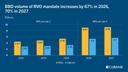
CoBank’s Knowledge Exchange on July 8 released a new quarterly report that discusses the current status of the Renewable Fuel Standard, indicating that this year’s level of blending could determine the future trajectory of the program.

The North American SAF Conference & Expo has expanded its agenda with the addition of a new Tuesday afternoon General Session featuring many of the industry's most influential leaders and organizations.
Advertisement

@ Copyright 2026 - BBI International - All rights reserved.