


The USDA on Oct. 19 announced plans to launch a new Harvest Fuel Relief program to provide $8 billion to U.S. farmers to help offset high fuel costs. The one-time payments will be funded through the USDA’s CCC and administered by the FSA.
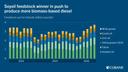
CoBank on Oct. 7 released its latest quarterly insights report, which discusses the impact of 45Z clean fuel production credits and fuel mandates on biofuel demand and highlights how soaring fuel prices are impacting the farm supply chain.

The U.S EPA has announced it will hold a virtual public hearing on Nov. 4 to gather stakeholder input on the rulemaking it released in mid-October that proposes two options to reallocate 770 million RINs waived through recent SREs under the RFS.

The U.S. EPA on Oct. 15 reported that 2.02 billion RINs were generated under the RFS in September, down slightly when compared to the same period of last year. Total RIN generation for the first nine months of 2026 reached 18.52 billion

The U.S. Department of Energy on Oct. 14 released guidance that will help clean fuel producers claim the 45Z clean fuel production credit for fuels, feedstocks and pathways not included in the agency’s current 45Z rate table.

The U.S. Department of Energy’s Alternative Fuels and Feedstocks Office on Oct. 14 announced its intent to award up to $60 million to support production and distribution of novel, high-impact chemicals, fertilizers, fuels and feedstock technologies.

U.S. EPA Administrator Lee Zeldin on Oct. 13 announced the agency will propose two options to reallocate 770 million renewable identification numbers (RINs) waived through recent small refinery exemptions (SRE) under the Renewable Fuel Standard.
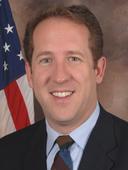
Reps. Adrian Smith, R-Neb., Nikki Budsinski, D-Ill., and 37 of their colleagues on Oct. 8 sent a letter to U.S. EPA Administrator Lee Zeldin and U.S. Energy Secretary Chris Wright urging the administration to follow through with SRE reallocations.

The USDA on Oct. 6 announced a $180 million investment to launch the USDA’s Seed Sovereignty Initiative, a major effort to both strengthen U.S. agricultural security by protecting the plant genetic resources and enabling ag innovation.

Advanced Biofuels Canada Association welcomes the introduction of Bill C-39, An Act respecting certain measures to strengthen the economy (Building Canada Strong Act), tabled in the House of Commons on Sept. 21, 2026.

According to the USDA, President Trump’s executive order that lifts taxes on dyed-diesel is expected to represent approximately $640 million in combined federal and state savings across about 224.6 million harvested acres.

The U.S. EPA on Oct. 2 delivered a proposed rule to the White House Office of Management and Budget regarding the agency’s plan to reallocate 2025 Renewable Fuel Standard volumes waived via small refinery exemptions (SREs).
The U.S. DOE’s Office of Technology Commercialization on Sept. 24 announced it is now accepting applications for up to $41 million that is being made available to advance the commercialization of promising technologies in five priority areas.
A coalition of stakeholders on Sept. 14 sent a letter to leaders of the European Commission urging them to resist pressure to allow electrolytic hydrogen used an intermediate processing input to be counted towards the EU’s e-SAF requirement.

The USDA on Sept. 30 published a final rule that fundamentally changes the structure and administration of REAP. The program will now require projects to be fully built and operational before an application can even be filed.
The USDA on Sept. 29 announced increased financial assistance for the Regenerative Pilot Program from $700 million to $1 billion in fiscal year 2027, providing more producers with the opportunity to adopt conservation systems.

The call for presentation abstracts for the 20th Annual International Biomass Conference & Expo, produced by Biomass Magazine, is now open. The event will take place March 2-4 at the Cobb Convention Center in Atlanta, Georgia.

The Civil Aviation Authority of Singapore is deferring implementation of the SAF levy for air cargo shipments for one year. The SAF levy for origin-destination passengers and general and business aviation will be implemented on schedule.

The Renewable Fuels Association on Sept. 18 filed two petitions for review with the U.S. Court of Appeals for the D.C. Circuit challenging small refinery exemptions (SREs) approved by the U.S. EPA in August.

The USDA’s National Agricultural Statistics Service (NASS) today launched AgInsights, a new data dissemination tool that will serve as a key component of NASS’s ongoing modernization strategy.
The U.S. EPA on Sept. 17 reported that 2.02 billion RINs were generated under the RFS in August, up 6% when compared to the same month of last year. Total RIN generation for the first eight months of the year reached 16.34 billion.

On Sept. 16, the USDA released the American Biofuels Trade Outlook, a plan that builds upon 2025’s record U.S. ethanol export performance, removes restrictions to American biofuels, and secures new market opportunities for U.S. farmers.

The Senate Agriculture Committee on Sept. 16 voted 12-11 to advance the Agriculture Act of 2026, commonly referred to as Senate Farm Bill 2.0. The legislation includes provisions allowing year-round sales of E15 and supporting the SAF industry.

U.S. Agriculture Secretary Brook Rollins on Sept. 15 announced the launch of USDA’s new American Biofuels Trade Outlook, a four-part strategy that aims to boost export opportunities for U.S. biofuel producers.

The IRS on Sept. 8 issued guidance on the 45Z clean fuel production credit that provides the 2026 emission rate tables used to calculate the credit and provides guidance on the use of manure-derived fuels and regenerative agriculture practices.
The U.S. Department of Energy on Sept. 8 released an update of its 45ZCF-GREET model, which is used to calculate fuel emissions rates for the 45Z clean fuel production credit. The agency previously updated the model in June 2026.

The USDA has released a new Data Modernization Plan to put farmers first, reduce unnecessary burdens on producers, and improve the timeliness, accuracy, and usefulness of the agricultural data that informs decisions across American agriculture.

As the USDA’s regenerative ag feedstock framework moves toward implementation under the 45Z clean fuel production credit, attention is growing towards reallocating reduced-CI feedstock between separately located, but commonly owned elevators.
The U.S. Department of Energy’s Office of the Secretarial Boards & Councils on Aug. 18 published a notice announcing the Secretary of Energy Advisory Board will be renewed for a two-year period beginning on Aug. 26.
The U.S. EPA on Aug. 31 issued a final rule extending the RFS compliance reporting deadline for compliance year 2025 from Sept. 1, 2026, to Oct. 1, 2026. The delay is related to small refinery exemption (SRE) decisions issued earlier in the day.
Advertisement

@ Copyright 2026 - BBI International - All rights reserved.