


LanzaTech Global Inc. on Sept. 2 announced the company has partnered with Fraunhofer Institute for Interfacial Engineering and Biotechnology IGB and the Mibelle Group to develop a HEFA pathway for SAF using a palm oil alternative.
Scaling SAF: Technological and Economic Perspectives

By Paul Ticehurst
September 02, 2025
The development of production technologies is a critical step toward making SAF a mainstream alternative to fossil-based jet fuels.

Business aviation is looking at SAF as a key means of reaching carbon reduction and sustainability goals.
Readying the Runway

September 02, 2025
Getting sustainable aviation fuel airborne requires not only technological innovation, but also coordinated problem-solving. SAF Magazine checks in on the progress made on the Minnesota SAF Hub.

Sky’s the Limit

September 02, 2025
Colocated with the 2025 International Fuel Ethanol Workshop and Expo, this year’s Sustainable Fuels Summit offered key insights into future SAF markets, feedstocks and opportunities.

The Trump administration’s One Big Beautiful Bill Act offers mixed signals for biofuels and SAF producers despite its on-paper promise.

With mounting global pressure to reduce carbon emissions, developing and scaling up sustainable aviation fuel production has become increasingly urgent.

Coprocessing allows refineries to integrate renewable feedstocks, meet regulatory mandates and tap into new revenue streams without overhauling existing infrastructure.

Sustainable aviation fuel production is currently both dominated and limited by HEFA—how can we scale it to meet demand?

Finnish company Liquid Sun is launching a globally unique pilot project to produce eSAF from biogenic CO₂ emissions. The pilot aims to establish a functioning ecosystem and value chain for synthetic fuel production in Finland.

An Air France Airbus A220 on Aug. 25 completed its delivery flight from Airbus’ site in Mirabel to Paris powered by SAF. The delivery marked the first time Airbus in Canada directly issued official sustainability credentials for SAF to a customer.

The New York State Energy Research and Development Authority on Aug. 20 announced the availability of up to $7.8 million to support pilot-scale and demonstration-scale projects within the state that convert waste streams into low-carbon fuels.

The U.S. EPA on Aug. 14 published a list of 165 candidates who have been nominated to service on the agency’s Science Advisory Board. The agency is accepting public comments on the nominees through Sept. 4.
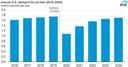
Five years after the COVID-19 national emergency was declared, gasoline demand, distillate demand, and jet fuel demand all remain less than pre-pandemic averages, according to the U.S. Energy Information Administration.
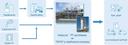
Toyo Engineering Corp. has been selected by the New Energy and Industrial Technology Development Organization (NEDO) for its initiative, “Development of Production Technologies for Sustainable Aviation Fuel (SAF), etc.”

SEKISUI CHEMICAL CO. LTD. and Velocys Inc. have signed a memorandum of understanding (MOU) establishing a strategic partnership to advance production technology for electro-sustainable aviation fuel (e-SAF), a CO2-derived synthetic fuel.

Universal Fuel Technologies’ ethanol-to-jet SAF produced via the company’s Flexiforming technology has been accepted into the ASTM D4054 Clearinghouse, which supports the technical evaluation of new aviation fuels, for qualification.

Air India and Indian Oil Corp. Ltd. on Aug. 19 signed a memorandum of understanding (MOU) for the supply of sustainable aviation fuel (SAF), marking a major step towards a greener future for Indian aviation.
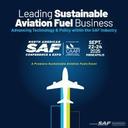
SAF Magazine and the Commercial Aviation Alternative Fuels Initiative announced the addition of new speakers to the 2025 North American SAF Conference & Expo, taking place Sept. 22–24 at the Minneapolis Convention Center in Minneapolis.
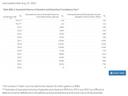
The U.S. EPA on Aug. 22 issued decisions on 175 small refinery exemption (SRE) petitions, granting full or partial exemptions of Renewable Fuel Standard blending obligations for 143 petitions. According to the EPA, 13 SRE petitions remain pending.

The U.S. EPA on Aug. 21 released data showing more than 1.92 billion RINs were generated under the Renewable Fuel Standard in July, down from 2.26 billion generated during the same month of last year.

STX Group, a leading environmental commodities trader and climate solutions firm, on Aug. 13 announced the completion of the first successful delivery of sustainable aviation fuel certificates (SAFc).
The U.S. EPA announced it has “developed a new approach” for reviewing SREs in a document filed with the U.S. Court of Appeals for the Tenth Circuit on Aug. 19. The agency is expected to issue decisions on outstanding SRE petitions soon.

University of New South Wales researchers are set to scale up a next-generation electrolyzer system that helps produce sustainable aviation fuel (SAF) using renewable energy, thanks to a $1.2 million grant from the TRaCE Lab to Market Fund.

Tidewater Renewables on Aug. 14 announced its renewable diesel facility British Columbia operated at 72% capacity during Q2. The company continues to advance plans to add SAF capacity to facility, with a final investment decision targeted for 2026.

Circularity Fuels has converted biogas from a California Central Valley dairy farm into syngas, a key precursor to SAF, using a compact electric processing unit one-hundredth the cost of conventional steam methane or autothermal reformers.

EcoCeres Inc., a leading pure-play renewable fuels producer, is partnering with Xiamen Airlines to collect and transport waste cooking oil from selected restaurant partners through its established supply chain.

Ethanol Producer Magazine has announced the 42th annual International Fuel Ethanol Workshop & Expo (FEW) will take place on June 2-4, 2026, at the America’s Center in St. Louis, Missouri.

Kintetsu World Express Inc. has entered into a new agreement with Shell Aviation regarding the use of SAF. Under this agreement, KWE will adopt Shell Aviation's digital platform "Avelia" to swiftly address shippers' low-carbon transportation needs.
Advertisement

@ Copyright 2026 - BBI International - All rights reserved.