


Advanced Biofuels Canada Association President Fred Ghatala on March 12 released a statement highlighting the stabilizing role of biofuels amidst current global crude oil supply shocks.

Equilibrion and Rolls-Royce SMR have signed a memorandum of understanding to collaborate on a technical and economic assessment, to better understand the opportunity for nuclear powered SAF using small modular reactors.

Neste, the world’s leading producer of renewable diesel and sustainable aviation fuel (SAF), has appointed new leadership team members as part of an organizational change that primarily affects the company’s Renewable Products business.
Accelerating Innovation

March 13, 2026
In the Pacific Northwest, a new coalition has mobilized to accelerate sustainable aviation fuel production, confronting the challenges shaping this emerging industry.
XCF Global Inc. on March 10 announced its stockholders approved the issuance of 19.99% or more of the company's issued and outstanding common stock as of Jan. 26. The company has also initiated upgrades to its Reno biorefinery.

Clariant on March 3 announced a strategic collaboration with Vertimass LLC aiming to accelerate the development and commercialization of advanced zeolite catalysts for the catalytic conversion of biobased alcohols.

John Deere is emerging as a quiet catalyst in the bioenergy transition, expanding equipment compatibility, data tools and policy engagement to help farmers connect their crops to growing markets for biodiesel, renewable diesel and sustainable aviation fuel.

The U.S. EIA reduced its forecast for 2026 renewable diesel production in its latest Short-Term Energy Outlook, released March 10. The forecasts for the production of biodiesel and “other biofuel,” defined to include SAF, were maintained.

Axens has signed a memorandum of understanding (MOU) with Airbus to strengthen their cooperation in the development and deployment of sustainable aviation fuel (SAF), a key pillar for decarbonizing the aviation sector.

U.S. EPA Administrator Lee Zeldin on March 9 announced the selection of new members to the Clean Air Scientific Advisory Committee. The newly appointed CASAC will consist of a chair and six new members.

The USDA reduced its forecast for 2025-’26 soybean oil use in biofuel production in its latest World Agricultural Supply and Demand Estimates report, released March 10. The expected price for soybean oil was revised up.

Repsol on March 10 announced plans to invest up to EUR 10 billion ($11.61 billion) in its operations through 2028, with a portion of that investment dedicated to low-carbon projects, including renewable fuels.
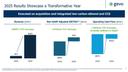
Gevo Inc. on March 5 announced plans to expand capacity at its North Dakota ethanol plant to 75 MMgy. The company also plans to make a final investment decision on the development of an adjacent SAF project later this year.
EASA publishes briefing note on SAF prices in 2025 in the EU
By European Union Aviation Safety Agency
March 09, 2026
The European Union Aviation Safety Agency has published the “2025 Aviation Fuels Reference Prices for ReFuelEU Aviation” briefing note, which provides key reference prices for SAF and other relevant aviation fuels for the European Union.
A newly released independent economic impact study finds that biomanufacturing projects located in Biofuel Development Opportunity (BDO) Zones generate substantial and repeatable economic benefits.

The House Agriculture Committee on March 5 voted 34 to 17 to advance the Farm, Food and National Security Act of 2026, commonly known as the 2026 Farm Bill. The vote followed a two-day markup session that spanned roughly 25 hours.
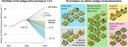
Two researchers at Imperial College London on March 5 published a paper that identifies 36 strategies with the highest potential to reduce global carbon emissions. Biofuels and BECCS are among the strategies identified by the researchers.

Scaling sustainable aviation fuel (SAF) is one of the central challenges facing the aviation sector. Meeting this challenge requires collaboration across the value chain, supported by credible frameworks that enable new ways of bringing SAF to market.

Syzygy Plasmonics on March 3 announced an MOU with Geo bio gas&carbon, Brazil's foremost sugarcane and ethanol waste to biogas developer and operator, to develop commercial-scale sustainable aviation fuel (SAF) projects in Brazil.
Swedavia, the owner of 10 Swedish airports, continues to support the aviation industry’s transition by inviting other stakeholders to participate in its annual procurement of sustainable aviation fuel (SAF).

Siemens and CAPHENIA have entered a partnership to scale the production of SAF. As preferred automation and digitalization partner, Siemens will provide digitalization and automation solutions for CAPHENIA's plasma technology

Par Pacific Holdings Inc. on Feb. 24 confirmed commissioning is underway on a biorefinery project under development at the company’s Kapolei refinery in Hawaii that will add 61 MMgy of capacity to produce renewable diesel, SAF and associated biofuels.
Aligned Energy Pte Ltd. and Phi Earth Technologies Pte. Ltd. have signed a non-binding MOU to undertake a structured pilot program designed to evaluate the commercial viability of an integrated biofuel feedstock system.
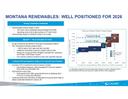
Calumet Inc. on Feb. 27 confirmed that the MaxSAF expansion at its Montana Renewables facility remains on track to be operational in the second quarter of 2026. The project will boost sustainable aviation fuel (SAF) capacity to 120-150 MMgy.
U.S. biofuel producers consumed 30.569 billion pounds of feedstock in December, up 4% when compared to the previous month, but down slightly when compared to December 2024, according to data released by the U.S. EIA on Feb. 27.
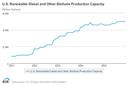
Total operable U.S. biofuel capacity expanded to 25.323 billion gallons per year in December with gains for ethanol, according to data released by the U.S. Energy Information Administration on Feb. 27.

SAF Magazine, in collaboration with the Commercial Aviation Alternative Fuels Initiative, has announced the 2026 North American SAF Conference & Expo will take place Aug. 25-27, in Tacoma, Washington, at the Greater Tacoma Convention Center.

Eni has announced it will proceed with plans to convert certain units of the Sannazzaro de’ Burgondi refinery into a biorefinery that can produce 550,000 metric tons per year of feedstock, with the flexibility to produce SAF and renewable diesel.

EcoCeres Inc. on Feb.27 urged European policymakers and aviation stakeholders to keep the EU SAF market open and competitive, cautioning that potential trade defense measures on imported SAF could undermine EU climate objectives
Advertisement

@ Copyright 2026 - BBI International - All rights reserved.