


Neela Biotech, the Cambridge-based biotech startup turning waste into SAF, on Oct. 8 announced it has raised £2.1 million in pre-seed funding to take its technology from the lab to a pilot-scale trial at a biogas plant over the next two years.

The U.S. Department of Energy’s Alternative Fuels and Feedstocks Office on Oct. 14 announced its intent to award up to $60 million to support production and distribution of novel, high-impact chemicals, fertilizers, fuels and feedstock technologies.
Creating yeast strains that aren’t picky eaters

By U.S. Department of Energy
September 08, 2026
Researchers at the Center for Advanced Bioenergy and Bioproducts Innovation (CABBI) engineered a strain of yeast that does not prefer any individual sugar. The strain simultaneously utilized multiple sugars.
An oil-accumulating yeast could help make next-generation aviation fuels

By U.S. Department of Energy
September 04, 2026
Researchers at the Joint Bioenergy Institute have demonstrated the production of a biobased jet fuel precursor Rhodosporidium toruloides, a type of oil-accumulating yeast that is a promising microbial host for biomanufacturing.
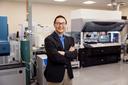
Illinois-led team selected for DOE Genesis Mission award
By University of Illinois
September 03, 2026
A multidisciplinary team led by U. of I. chemical and biomolecular engineering professor Huimin Zhao has received DOE funding to develop the world’s first foundation models specifically designed for metabolic engineering.
Self-driving lab: AI and automated biology combine to improve enzymes

By University of Illinois
July 30, 2026
By combining artificial intelligence with automated robotics and synthetic biology, researchers at the University of Illinois Urbana-Champaign have dramatically improved performance of two important industrial enzymes.
The DOE on July 22 announced it has selected 278 projects to move forward with award negotiations under the Genesis Mission request for applications released in March. Several bioenergy-related projects are among those selected by the agency.
Tufts: Expanding uses for bioengineered bacterial spores
By Tufts University
July 02, 2026
Tufts University researchers have found new ways to expand the potential for using bacterial spores as catalysts for chemical reactions, biofuel production, or breaking down pollutants.
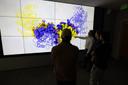
Why use living cells? NLR is making chemicals with enzymes alone
By National Laboratory of the Rockies
June 29, 2026
Researchers at the U.S. Department of Energy’s National Laboratory of the Rockies are addressing the technical challenges for “cell-free” biomanufacturing, which could reduce the costs of biobased chemicals.

President Donald Trump on April 13 signed the Small Business Innovation and Economic Security Act. The legislation reauthorizes the Small Business Innovation Research (SBIR) and Small Technology Transfer (STTR) programs.

Converting sugarcane waste to biofuel could become more environmentally friendly and cost effective, thanks to a joint project at The University of Queensland and the Indian Institute of Technology Delhi.

The U.S. Senate and U.S. House of Representatives in March each voted in favor of a bill to reauthorize the Small Business Innovation Research and Small Technology Transfer programs. The legislation currently awaits action from President Trump.
Accelerating Innovation

March 13, 2026
In the Pacific Northwest, a new coalition has mobilized to accelerate sustainable aviation fuel production, confronting the challenges shaping this emerging industry.
At PNNL, AI is accelerating the US bioeconomy
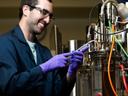
By Pacific Northwest National Laboratory
February 11, 2026
PNNL researchers are using AI to help accurately predicting how organisms’ characteristics respond to not only their genes, but also their environments (a nascent field called “predictive phenomics”).
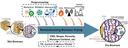
South Dakota Mines is partnering with Idaho National Laboratory on two-year project focused on improving biomass drying. The project combines advanced AI developed by Mines with cutting-edge research at INL.

Lydian, a Massachusetts-based company developing novel technology that converts waste CO2 into low-cost and scalable drop-in sustainable aviation fuel (SAF), has opened a 25,000-square-foot facility at Hood Park in Boston.

The USDA on Dec. 30 announced new research and development priorities for 2026. One of the five new priorities focuses on market expansion and creating new uses for U.S. agricultural products, including for use in biofuel and bioenergy.
The U.S. Department of Energy on Dec. 1 announced it has renamed the National Renewable Energy Laboratory as the National Laboratory of the Rockies. The change is effective immediately, according to the agency.

Blue Biofuels has announced the completion of its Phase 2 SBIR grant awarded by the U.S. DOE. The grant has enabled Blue Biofuels to advance the scale-up of its patented cellulose-to-sugar (CTS) technology toward full commercialization.
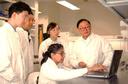
Scientists at Washington State University have found a new way to produce sugar from corn stalks and other crop waste, potentially opening a new pathway to sustainable biofuels. The experimental process used ammonium sulfite-based alkali salts.

Ethanol Producer Magazine and BBI International are now accepting speaker presentation proposals for the 2025 International Fuel Ethanol Workshop & Expo (FEW). The event is scheduled for June 9-11, 2025, in Omaha, Nebraska.
The U.S. DOE has awarded Small Business Innovation Research and Small Business Technology Transfer Phase II funding to six bioenergy projects, including those focused on low-carbon liquid biofuels for aviation, marine and rail transportation.
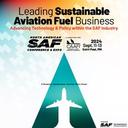
SAF Magazine and the Commercial Aviation Alternative Fuels Initiative announced the preliminary agenda for the North American SAF Conference and Expo, being held Sept. 11-13 at the Saint Paul RiverCentre in St. Paul, Minnesota.
Landfill gas could be turned into SAF in plasma chemistry leap

By University of Sydney
May 31, 2024
In a world first, University of Sydney researchers have developed a chemical process using plasma that could create sustainable jet fuel from methane gas emitted from landfills, potentially creating a low-carbon aviation industry.
DOE: Computational models can accelerate and scale up biomass conversion

By U.S. Department of Energy
March 22, 2024
Researchers at the National Renewable Energy Laboratory Computational Science Center are hard at work enabling the conversion of biomass to fuels and products at industrial scale.
A Major Upgrade
November 14, 2023
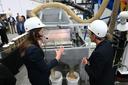
The newly renovated Biomass Feedstock National User Facility aims to serve as a vital industry partner as the most complete feedstock preprocessing R&D facility in the world. In May, U.S. Secretary of Energy Jennifer Granholm cut the ribbon at Idaho National Laboratory’s Biomass Feedstock National User Facility, celebrating $15 million in upgrades largely designed to assist industry partners in the scale-up of the sustainable aviation fuel (SAF) sector. BFNUF Director Lynn Wendt tells SAF Magazine that the U.S.-DOE funded lab’s first physical process development unit was actually installed in 2010, a time at which a modest selection of tools were available. “Now, we’re really the go-to lab for feedstocks logistics and mechanical processing, and really one of the only facilities in the world that has all these capabilities all under one roof,” she says...
Advertisement

@ Copyright 2026 - BBI International - All rights reserved.