


Neste has revised down its 2024 guidance for renewable products, citing substantially reduced diesel prices. The company said waste and residue feedstock prices have not decreased and renewable product market price premiums have remained weak.

Agriculture Secretary Tom Vilsack on Sept. 10 explained USDA’s work to support guidance for the 45Z Clean Fuel Production Credit and candidly discussed the possible repercussions of efforts to limit the credit to domestically produced feedstocks.

The U.S. Energy Information Administration on Sept. 10 began publishing new monthly forecasts for renewable diesel and other biobased fuels to better capture how biofuels are being consumed and overall demand for distillate fuels.

GREATER MSP Partnership has announced major developments and celebrated a year of accomplishments toward operating the first large-scale, end-to-end sustainable aviation fuel (SAF) value chain in the United States.

More than three dozen members of the U.S. House of Representatives are urging the U.S. Treasury Department to ensure only fuels manufactured from domestically sourced feedstocks qualify for the upcoming 45Z Clean Fuel Production Credit.
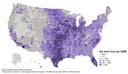
The Bioenergy Knowledge Discovery Framework is the nation’s premier source of information on biomass potential, providing high-quality data that can guide investments in support of a robust bioeconomy for sustainable, low-carbon energy sources.
The Sustainable Aviation Fuel (SAF) Coalition submitted comments in response to requests for stakeholder comments on energy credits and incentives from the Supply Chain Tax Team of the U.S. House of Representatives’ Committee on Ways and Means.

The U.S. DOE has awarded Small Business Innovation Research and Small Business Technology Transfer Phase II funding to six bioenergy projects, including those focused on low-carbon liquid biofuels for aviation, marine and rail transportation.

On Aug. 30, Korean Air began using domestically produced SAF for the first time on flight KE719 from Seoul Incheon to Tokyo Haneda. Korean Air is the first Korean flag carrier to operate commercial flights partially powered by SAF produced in Korea.

The U.S. Department of Energy Bioenergy Technologies Office (BETO) is overseeing a call for industry partnerships to connect industry stakeholders with the capabilities of the Feedstock-Conversion Interface Consortium.
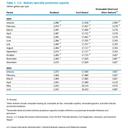
Operable U.S. biofuels production capacity increased in June, with gains for both ethanol and renewable diesel, according to data released by the U.S. Energy Information Administration on Aug. 30. Feedstock consumption was up for the month.

LanzaTech Global Inc. has signed a master license agreement with SEKISUI CHEMICAL CO. LTD. to deploy, at commercial scale, a jointly developed platform that converts syngas derived from MSW and industrial solid waste into ethanol.

Avflight Mesa, in partnership with leading aviation fuel supplier, Avfuel Corp., is excited to announce it now offers an emission-reducing fuel option: sustainable aviation fuel (SAF). The first truckload of SAF arrived on Aug. 28.

Starting on Aug. 28, Iberia Maintenance will use 5% sustainable aviation fuel (SAF) in its engine test bench at the La Muñoza facilities, near the Adolfo Suarez Madrid-Barajas airport in Madrid, Spain.
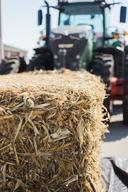
SAFFiRE Renewables LLC broke ground on its pilot plant at Conestoga Energy’s Arkalon Energy facility in Liberal, Kansas, marking a significant step in SAFFiRE’s journey to transform corn stover into an abundant low carbon feedstock for SAF.
Conestoga, SAFFiRE break ground on new corn stover bioethanol plant

By Growth Energy
August 29, 2024
Growth Energy Members Conestoga Energy and SAFFiRE Renewables broke ground yesterday on a new facility that will eventually produce cellulosic bioethanol from corn stover—then convert that bioethanol into sustainable aviation fuel (SAF).
The Sustainable Advanced Biofuel Refiners Coalition, a national biodiesel trade association made up of nearly 60 organizational members, submitted comments Aug. 27 to CARB on proposed changes to the state’s LCFS.
SAF Magazine has announced the six companies selected to pitch to a group of investors at Pitch Day at the 2024 North American SAF Conference & Expo, taking place Sept. 11-13 at the Saint Paul RiverCentre in Saint Paul, Minnesota.
Clean Fuels Alliance America on Aug. 28 sent a letter to Treasury Secretary Janet Yellen, urging the agency to issue guidance, including safe harbors, to the 45Z Clean Fuels Production Credit by Sept. 1.

A proposed cap on soy- and canola-based biodiesel and renewable diesel could raise prices of fuel and goods for California consumers and set back decarbonization efforts by years, according Clean Fuels Alliance America.

Cepsa Bioenergia San Roque SL (CBSR), a joint venture between Cepsa and Bio-Oils (subsidiary of Apical), has awarded Worley a services contract for the expansion of CBSR’s renewable fuel complex in Huelva, Spain, including a new biofuel plant.

Acer, Cathay Cargo, and Dimerco Express Group are joining forces to reduce carbon emissions in aviation. Acer and its logistics provider Dimerco have signed an agreement to SAF use on Cathay Cargo's flights, beginning from 2024.

New and unique feedstocks abound for the SAF industry, offering significant carbon reduction potential for the aviation industry.
The Future of Aviation is Now
By Clean Fuels Alliance America
August 27, 2024
The aviation industry stands at the cusp of a monumental shift as it grapples with its significant carbon footprint.
Growing SAF Production and Accessibility to Help Cut Aviation Emissions

By Alexander Kueper
August 27, 2024
The key to increasing SAF production is investing in renewable products production capacity, but it also requires vision and commitment.
SAF Production Set to Grow Amid Renewable Diesel Switching

By Jordan Godwin
August 27, 2024
Sustainable aviation fuel markets have been slow to produce substantial volumes, but renewable diesel producers facing depressed margins are ready to flip the switch.

The government of Brazil on Aug. 22 announced it will offer R$6 billion ($1.09 billion) to support the development of biorefineries to produce sustainable aviation fuel (SAF) and sustainable marine fuels.

EcoCeres Inc., a leading pure-play renewable fuel producer, delivered its first vessel with 10 million liters of a sustainable blending component for jet fuel (neat HEFA-SPK) to the Evos Ghent terminal.
Advertisement

@ Copyright 2026 - BBI International - All rights reserved.