


Gevo Inc. CEO Patrick Gruber discussed plans for a proposed 30 MMgy alcohol-to-jet (ATJ) project in North Dakota during the company’s first quarter earnings call, held May 13. The company has not disclosed a timeline for development of the project.
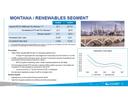
Calumet Inc. on May 9 announced sustainable aviation fuel (SAF) capacity at its Montana Renewables biorefinery is expected to reach 120 MMgy to 150 MMgy sooner than previously reported for a fraction of the originally expected cost.

Aemetis Inc. released Q1 results on May 8, reporting increased biogas production, progress with efficiency improvements at the Keyes ethanol plant, and resumed biodiesel deliveries. Financing activities are also underway for a proposed SAF project.

Wheels Up Experience Inc. on May 6 announced the launch of its new SAF program, under which Wheels Up will partner with Delta Air Lines to purchase SAF, allowing private fliers to participate regardless of their flight operator or departure airport.
Draft ‘big, beautiful bill’ includes 45Z extension, repeal of certain IRA funding for biofuels

May 12, 2025
Draft language for President Trump’s “big, beautiful bill” released by federal lawmakers on May 12 includes language that would update and extend the 45Z clean fuel production tax credit and rescind biofuel funding allocated to the EPA by the IRA.

The USDA reduced its estimate for 2024-’25 soybean use in biofuel production in its latest WASDE report, released May 12. The agency expects soybean oil use in biofuel to increase during the 2025-’26 marketing year.

LanzaJet and BioD have launched a feasibility study to develop the first sustainable aviation fuel (SAF) production plant in Colombia. The proposed facility would utilize LanzaJet’s alcohol-to-jet (ATJ) technology.

Masdar, the UAE’s clean energy leader, and OMV, Austria’s integrated chemicals, fuels and energy company, have signed an agreement to partner in the production of green hydrogen, eSAF, and other sustainable products.

Scientists at Washington State University have found a new way to produce sugar from corn stalks and other crop waste, potentially opening a new pathway to sustainable biofuels. The experimental process used ammonium sulfite-based alkali salts.

Reps. Zach Nunn, R-Iowa, and Nikki Budzinski, D-Ill., on May 7 introduced a bill that aims to update USDA’s Section 9003 program to expand access to grants, streamline loan guarantees and provide $100 million in mandatory funding over five years.
On May 6, the Sustainable Aviation Buyers Alliance released a request for proposal (RFP) to increase the supply of next-generation sustainable aviation fuel (SAF), including power-to-liquids and those using advanced biobased feedstocks.

The U.S. Energy Information Administration maintained its 2025 and 2026 forecasts for renewable diesel and “other biofuel” production, which includes SAF, in its latest Short Term Energy Outlook, released May 6.

Sunoco LP on May 5 announced a definitive agreement to acquire all outstanding shares of Parkland Corp. The Burnaby refinery, which recently began to produce SAF, is among the assets subject to the transaction.

Ethanol Producer Magazine announced this week the six companies selected to pitch to a group of angel investors and venture capital firms at the International Fuel Ethanol Workshop & Expo, taking place June 9-11, 2025, in Omaha, Nebraska.

Ethanol Producer Magazine has announced the keynote speakers for the 2025 International Fuel Ethanol Workshop & Expo (FEW) being held June 9-11, 2025, at the CHI Health Center in Omaha, Nebraska. The general session will take place June 10.
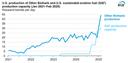
SAF production is growing in the U.S. as new capacity comes online. U.S. production of “other biofuels,” the category the U.S. EIA uses to capture SAF data in its reports, approximately doubled from December 2024 to February 2025.

Reps. Mike Carey, R-Ohio, and Mariannette Miller-Meeks, R-Iowa, on May 1 introduced legislation that aims to retroactively extend the biodiesel blenders tax credit (BTC) and the second-generation biofuel producer tax credit.
A new study commissioned by Clean Fuels Alliance America shows the U.S. biomass-based diesel industry generated $42.4 billion in economic activity in 2024, supported 107,400 jobs and paid $6 billion in annual wages.
A broad coalition representing more than 350 trucking fleets, shippers, and supporters of freight movement is urging Congress to extend the biodiesel blenders’ tax credit to lower supply chain costs and protect consumers from inflationary pressures.

Repsol and Bunge on April 25 announced plans to incorporate the use of camelina and safflower feedstocks in the production of renewable fuels, including renewable diesel and sustainable aviation fuel (SAF).
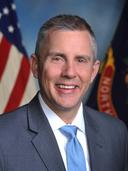
North Dakota Gov. Kelly Armstrong on April 15 signed a bill creating a low-carbon fuels fund that is designed to help the state’s ethanol producers lower the CI of the fuel they produce, which could help producers participate in the SAF market.
Germany-based Mabanaft on April 17 announced it started to supply SAF to airlines at Frankfurt Airport in January. The company said it will deliver more than 1,000 metric tons of SAF to the airport this year under the European SAF mandate.
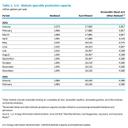
U.S. operable biofuel capacity in February was unchanged from the previous month, according to data released by the U.S. EIA on April 30. Feedstock consumption for February was down when compared to both January 2025 and February 2024.

The Oregon DEQ has confirmed that the 2024 annual report deadline for the state’s Clean Fuels Program will be delayed until May 30 due to a cyberattack the resulted in an extended outage of the Oregon Fuels Reporting System.
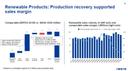
Neste Corp. released first quarter financial results on April 29, reporting improved renewable fuel demand and increased SAF production. Margins, however, were low and feedstock costs were high.

CVR Energy Inc.’s renewables segment on April 28 reported positive adjusted EBITDA for Q1 2025 despite the expiration of the $1 per gallon blenders tax credit. Renewable diesel production volumes were up for the three-month period.

Legislation currently under consideration by the New York legislature aims to establish a clean fuel standard (CFS) that would reduce the greenhouse gas (GHG) intensity from on-road transportation by 20% by 2033.

easyJet and ATOBA Energy, in partnership with World Fuel Services, announce the signing of a memorandum of understanding for the development of long-term supply of SAF for easyJet’s operations in Europe and the U.K.
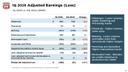
Phillips 66 released Q1 financial results on April 25, reporting reduced pre-tax earnings for its renewable fuels segment despite increased production volumes. The changing tax credit structure is one factor that impacted earnings.

EVA Air announced the signing of sustainable aviation fuel (SAF) procurement agreements with three major suppliers: AEG FUELS from the U.S., COSMO Oil Marketing Co. Ltd. from Japan, and Formosa Petrochemical Corp. from Taiwan.
Advertisement

@ Copyright 2026 - BBI International - All rights reserved.