


OMV Petrom, the largest integrated energy producer in Southeastern Europe, is advancing the construction of the new sustainable fuels production unit at Petrobrazi. The project is expected to begin commissioning in 2028.

The Renewable Fuels Association on Sept. 18 filed two petitions for review with the U.S. Court of Appeals for the D.C. Circuit challenging small refinery exemptions (SREs) approved by the U.S. EPA in August.
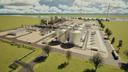
Emerson has been awarded a contract by Technip Energies to provide automation technologies for the SkyNRG sustainable aviation fuel (SAF) plant—the first dedicated greenfield SAF production facility in Europe.

Neste and United Airlines extended their existing agreement on the supply of SAF blended with conventional jet fuel to flights departing Chicago O’Hare International Airport in the U.S.and Amsterdam Airport Schiphol in the Netherlands.
The USDA’s National Agricultural Statistics Service (NASS) today launched AgInsights, a new data dissemination tool that will serve as a key component of NASS’s ongoing modernization strategy.

The U.S. EPA on Sept. 17 reported that 2.02 billion RINs were generated under the RFS in August, up 6% when compared to the same month of last year. Total RIN generation for the first eight months of the year reached 16.34 billion.

Sasol and White Desert on Sept. 15 announced a landmark sustainable aviation fuel (SAF) partnership, a significant milestone for African aviation and the country’s emerging lower-carbon fuels industry.

On Sept. 16, the USDA released the American Biofuels Trade Outlook, a plan that builds upon 2025’s record U.S. ethanol export performance, removes restrictions to American biofuels, and secures new market opportunities for U.S. farmers.

XCF Global Inc., a scaling U.S.-based producer of renewable diesel and SAF, together with DevvStream Corp. and Southern Energy Renewables Inc. on Sept. 14 announced an amendment to their previously announced business combination agreement.

The Senate Agriculture Committee on Sept. 16 voted 12-11 to advance the Agriculture Act of 2026, commonly referred to as Senate Farm Bill 2.0. The legislation includes provisions allowing year-round sales of E15 and supporting the SAF industry.

The U.S. DOE on Sept. 3 released the 2026 U.S. Energy and Employment Report, which shows employment in corn ethanol, biomass electricity generation and “other biofuels,” which includes biodiesel and renewable diesel, expanded in 2025.

CHS on Sept. 14 announced plans to construct a soybean processing facility near Evansville, Wisconsin, representing an investment of approximately $700 million. The facility will have the capacity to process 80 million bushels annually

FedEx is scaling its sustainable aviation fuel (SAF) procurement through new agreements projected to secure more than 20 million gallons of neat SAF across five U.S. airports through calendar year 2027.

U.S. Agriculture Secretary Brook Rollins on Sept. 15 announced the launch of USDA’s new American Biofuels Trade Outlook, a four-part strategy that aims to boost export opportunities for U.S. biofuel producers.

Wison Engineering and Axens on Sept. 7 signed a memorandum of understanding (MOU) to explore collaboration opportunities on selected e-sustainable aviation fuel (e-SAF) projects based on Fischer-Tropsch pathway.

The U.S. Energy Information Administration maintained its 2026 and 2027 production forecasts for biodiesel, renewable diesel and sustainable aviation fuel (SAF) in its latest Short-Term Energy Outlook, released Sept. 9.

Akasa Air, India’s fastest-growing airline, successfully operated a commercial flight using conventional aviation turbine fuel blended with 1% sustainable aviation fuel (SAF), supplied by Bharat Petroleum Corp. Ltd. on Sept. 8.

The USDA maintained its forecast for 2026-’27 soybean oil use in biofuel production in its latest World Agricultural Supply and Demand Estimates report, released Sept. 11. The estimate for 2025-’26 soybean use in biofuel production was revised up.
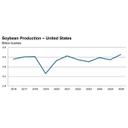
The USDA released its latest monthly Crop Production report on Sept. 11, predicting soybean production for beans will reach 4.53 billion bushels in 2026, up slightly from the previous forecast and up 6% from 2025.

Axens on Aug. 31 announced that it has been selected by Expander Energy Inc., a Canada-based producer of sustainable aviation fuel (SAF) and renewable diesel (RD), to provide its advanced FT Liquid Upgrading technology.

Total operatable U.S. biofuel production capacity was at 25.299 billion gallons per year in June, essentially unchanged when compared to the previous month, according to data released by the U.S. Energy Information Administration on Aug. 31.
The U.S. biofuel industry consumed 30.46 billion pounds of feedstock in June, up 4% when compared to May and up 6% when compared to June 2025, according to data released by the U.S. Energy Information Administration on Aug. 31.
Bayer and Neste close commercial agreement to jointly scale newgold winter canola for biofuels production

September 10, 2026
Bayer and Neste, the world’s leading producer of renewable diesel and sustainable aviation fuel (SAF), on Sept. 9 announced the companies have finalized a commercial agreement to jointly scale Bayer’s newgold winter canola.

The IRS on Sept. 8 issued guidance on the 45Z clean fuel production credit that provides the 2026 emission rate tables used to calculate the credit and provides guidance on the use of manure-derived fuels and regenerative agriculture practices.

The U.S. Department of Energy on Sept. 8 released an update of its 45ZCF-GREET model, which is used to calculate fuel emissions rates for the 45Z clean fuel production credit. The agency previously updated the model in June 2026.

Jet Zero Australia has achieved three major milestones for Project Ulysses, its proposed commercial-scale sustainable aviation fuel (SAF) and renewable diesel (RD) refinery in Townsville, Queensland, Australia.
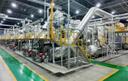
Niutech Technology Group Co. Ltd. has signed a sales contract with a global energy major for an industrial continuous waste plastic pyrolysis production line that will produce waste plastic pyrolysis oil that will be used to produce SAF.
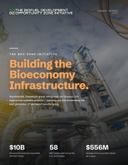
The BDO Zone Initiative on Aug. 31 released its 2025 Annual Report, Building the Bioeconomy Infrastructure. The report documents the year the network moved from expansion to execution, with CAD $10 billion in announced biomanufacturing investment.
Creating yeast strains that aren’t picky eaters

By U.S. Department of Energy
September 08, 2026
Researchers at the Center for Advanced Bioenergy and Bioproducts Innovation (CABBI) engineered a strain of yeast that does not prefer any individual sugar. The strain simultaneously utilized multiple sugars.

The Australian Defence Force has begun rolling out low carbon liquid fuel (LCLF) blends across its network in an effort to strengthen fuel resilience.
Advertisement

@ Copyright 2026 - BBI International - All rights reserved.