


Parkland Corp. released Q3 results on Oct. 27, reporting that the volume of biobased feedstock co-processed at its Burnaby Refinery was up 50%. The company also announced its previously announced purchase by Sunoco LP is expected to close Oct. 31.

The Washington Department of Ecology is working to develop a programmatic environmental impact statement for SAF that will provide a foundation for future project-level environmental reviews. A public comment period is open through Nov. 5.

The U.K. Department for Transport on Oct. 16 confirmed it will implement a revenue certainty mechanism for SAF in the form of an aviation fuel supplier levy. The agency is currently seeking public comments regarding implementation details.

Honeywell on Oct. 28 introduced its new Biocrude Upgrading process technology, which converts agricultural and forestry waste into ready-to-use renewable fuels, including marine fuels, gasoline and SAF.
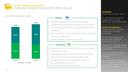
Italy-based energy company Eni on Oct. 24 released Q3 results, reporting that its Enilive business segment processed 315,000 metric tons of biobased feedstock during the three-month period, up 14% when compared to the same period of 2024.

More than two dozen federal lawmakers on Oct. 20 sent a letter to U.S. Treasury Secretary Scott Bessent urging his agency to finalize guidance for the 45Z clean fuel production credit, as amended by the One Big Beautiful Bill earlier this year.

Montana Renewables, in collaboration with Calumet Montana Refining, has commissioned onsite blending and shipping facilities to offer a nominal 50/50 blend of renewable and fossil jet fuel certified under ASTM D7566 and ASTM D1655 specifications.
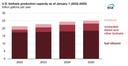
The pace of capacity additions for U.S. biofuel production slowed in 2024, with production capacity increasing by a modest 3% from the start of 2024 to the start of 2025, according to the EIA's latest biofuels production capacity reports.

Par Pacific Holdings Inc. on Oct. 21 announced the successful closing of Hawaii Renewables LLC, a joint venture to construct a renewable fuels facility and produce renewable fuels at Par Pacific’s refinery in Kapolei, Hawaii.

Airbus and the Cathay Group on Oct. 21 announced a joint investment of up to US$70 million to accelerate the development of sustainable aviation fuel (SAF) production in Asia and globally.

Valero Energy Corp. on Oct. 23 released Q3 results, reporting a profitable three-month period for its ethanol segment on record high production. Valero’s renewable diesel segment, which also includes SAF, reported a loss for the quarter.

Neste and United Airlines have expanded their existing partnership to supply SAF to three new major airports in the U.S., including George Bush Intercontinental Airport, Newark Liberty International Airport, and Dulles International Airport.
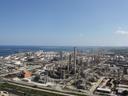
Eni has announced plans to develop a 500,000-metric-ton-per-year biorefinery at its existing industrial site in Priolo, Sicily. The facility, which will produce renewable diesel and SAF, is expected to be operational in 2028.

The U.S. Energy Information Administration is proposing to update current disclosure rules for biofuel feedstock consumption as part of a proposed three-year extension of its Petroleum Supply Reporting System.

Clean Fuels Alliance America on Oct. 22 wrote U.S. Trade Representative Jamieson Greer, asking him to close a loophole in the administration’s Reciprocal Tariff regime that exempts diesel and renewable diesel from reciprocal tariffs.

The call for presentation abstracts for the 19th annual International Biomass Conference & Expo is now open. The event will take place in Nashville, Tennessee, March 31 – April 2, 2026. Abstracts can be submitted through Nov. 21.

The National Farmer Union is urging the White House and congressional leadership to dedicate resources toward expanding use of ethanol, biodiesel and SAF as part of any effort to provide assistance to struggling U.S. agricultural producers.

Houston American Energy Corp. on Oct. 21 announced plan to develop biomass-to-liquid fuels and SAF projects that will integrate BTG Bioliquids’ proprietary fast pyrolysis technology for the production of fast pyrolysis bio-oil from woody biomass.
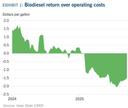
CoBank on Oct. 15 released its latest quarterly insights report, predicting the U.S. EPA will likely delay final action on its proposed Renewable Fuel Standard RVOs and small refinery exemption (SRE) reallocation proposals until early 2026.

XCF Global Inc.’s biorefinery located near Reno, Nevada, could resume SAF production as early as the first quarter of 2026, according a second quarter financial report filed with the U.S. Securities and Exchange Commission on Oct. 16.

European logistics company Exolum on Oct. 15 announced its decision to invest £4.5 million in creating the U.K.’s first independent sustainable aviation fuel (SAF) blending facility at Redcliffe Bay in south-west England.

The U.S. EPA on Oct. 16 released data showing more than 1.92 billion RINs were generated under the RFS in September, down approximately 9% when compared to last year. Total RIN generation for the first nine months of 2025 reached 17.13 billion.
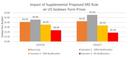
Clean Fuels Alliance America has shared with U.S. EPA Administrator Lee Zeldin projections of the economic impact for U.S. soybean farmers and processors of EPA’s proposed supplemental “SRE reallocation volume” to the 2026 and 2027 RFS volumes.

Honda Aircraft Co. on Oct. 13 announced it has become the first twin-turbine very light business jet manufacturer to utilize the HondaJet on a successful test flight running a 100% blend of sustainable aviation fuels (SAF).
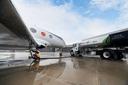
Gulfstream Aerospace Corp. on Oct. 13 announced its fleet of corporate, demonstration and support aircraft has surpassed 3 million nautical miles flown on SAF. The company plans to increase its SAF usage by 50% this year.

Gevo Inc. on Oct. 14 announced the U.S. Department of Energy’s Loan Programs Office has granted the company an extension of the conditional commitment for the $1.46 billion loan guarantee for its proposed sustainable aviation fuel (SAF) project.
The U.S. EIA maintained its forecasts for 2025 and 2026 renewable diesel production in its latest Short-Term Energy Outlook, released Oct. 7. The production outlook for “other” biofuels, which includes SAF, was also unchanged.
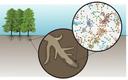
Scientists at ORNL conducted a meticulous analysis of the compounds released by plant roots into their surrounding environment. The analysis yielded an abundance of data that can guide research aiming to improve the way we grow energy and food crops.

Japan Airlines Co. Ltd. (JAP) on Oct. 8 announced it has invested in MORISORA Bio Refinery LLC to advance sustainable aviation fuel (SAF) produced from domestically sourced woody biomass bioethanol.

A team of agricultural economists, environmental scientists and policy experts envisions a path toward a carbon-neutral agricultural future by expanding the reach of policies designed to promote low-carbon biofuels for transportation and aviation.
Advertisement

@ Copyright 2026 - BBI International - All rights reserved.